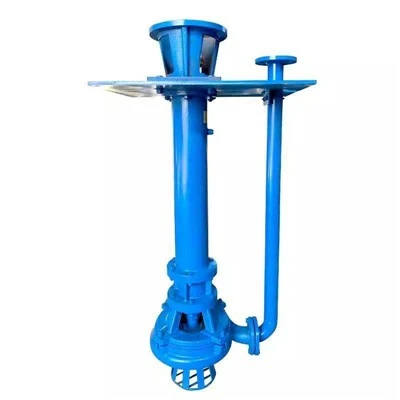
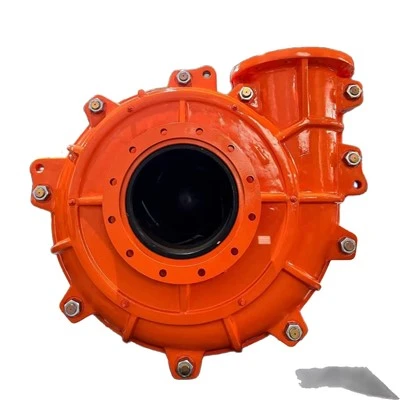
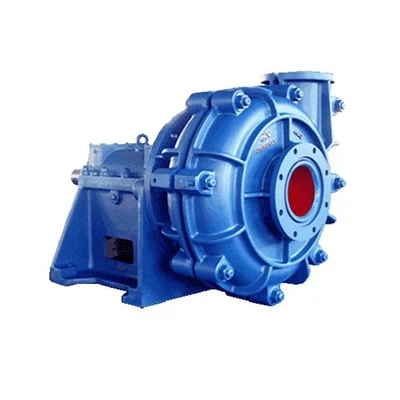
From the intake tank to the discharge outlet: Centrifugal pumps run throughout the entire process
In wastewater treatment plants, centrifugal pumps are almost everywhere. Starting from the front-end intake pump station, large horizontal centrifugal pumps or submersible pumps lift the sewage collected from the urban network to the treatment structures; during the biochemical treatment stage, reflux sludge pumps and mixed liquid reflux pumps use efficient and energy-saving submersible axial flow pumps or mixed flow pumps to maintain the active sludge concentration in the biological tanks; at the depth treatment and discharge stage, clear water centrifugal pumps pressurize the treated effluent for discharge or send it to the reclaimed water system.
"Put simply, without centrifugal pumps, wastewater cannot move," a water supply and drainage engineer from a municipal design institute pointed out. "Especially in flat terrain areas, multiple pump stations need to relay in stages, and the reliability of centrifugal pumps directly determines the continuity of the entire system."
Adapting to harsh conditions: Wear resistance, corrosion prevention and anti-clogging
The composition of wastewater treatment media is complex, containing solid particles, fiber impurities, corrosive gases and microorganisms, which pose strict requirements for centrifugal pumps. In response to this problem, in recent years, a series of adaptive innovations have emerged in the industry:
Wear-resistant materials: Flowing components use high-chromium alloys, duplex stainless steel or ceramic coatings to effectively resist sand particle wear;
Anti-clogging design: Semi-open or swirling impellers, large channel flowways and cutting devices, allowing wastewater containing long fibers to pass smoothly;
Seal reinforcement: Double-end face mechanical seals combined with flushing schemes to prevent sewage leakage and damage to the motor bearings.
The director of R&D of a well-known pump company stated: "In the design of the impeller of the submersible pump, we introduced CFD simulation optimization, increasing the through particle size by 30% and improving efficiency by 5 percentage points, truly achieving 'no clogging, wear resistance, and energy saving'."
Energy saving and consumption reduction: Frequency conversion speed regulation becomes a standard
The electricity consumption of wastewater treatment plants is as high as 60% to 80% of the total. Driven by the national "carbon neutrality" strategy, the energy-saving transformation of centrifugal pumps has become an important means of reducing carbon emissions. Currently, new construction and renovation projects generally adopt frequency conversion speed regulation technology, adjusting the rotational speed in real time according to the incoming water flow, keeping the pump always operating in the efficient zone.
Take a municipal wastewater treatment plant with a daily treatment capacity of 100,000 tons as an example. After replacing the fixed-speed pump with a variable-speed centrifugal pump, the tonnage water consumption can be reduced from 0.35 kWh to 0.28 kWh, saving over one million yuan in electricity costs annually. In addition, the application of technologies such as permanent magnet synchronous motors and efficient hydraulic models further pushed the system efficiency to over 85%.