

Hey there! As a supplier of Industrial Slurry Sand Pumps, I've seen firsthand how slurry density can have a huge impact on pump performance. In this blog post, I'm gonna break down what slurry density is, how it affects the performance of industrial slurry sand pumps, and why it's so important to get it right.
Let's start with the basics. What exactly is slurry density? Well, slurry is a mixture of solid particles and a liquid, usually water. The density of the slurry is determined by the amount of solid particles in the liquid. It's typically measured in kilograms per cubic meter (kg/m³) or pounds per cubic foot (lb/ft³). A higher slurry density means there are more solid particles in the liquid, while a lower density means fewer particles.
Now, let's talk about how slurry density affects the performance of industrial slurry sand pumps. There are several key areas where the density of the slurry can make a big difference.

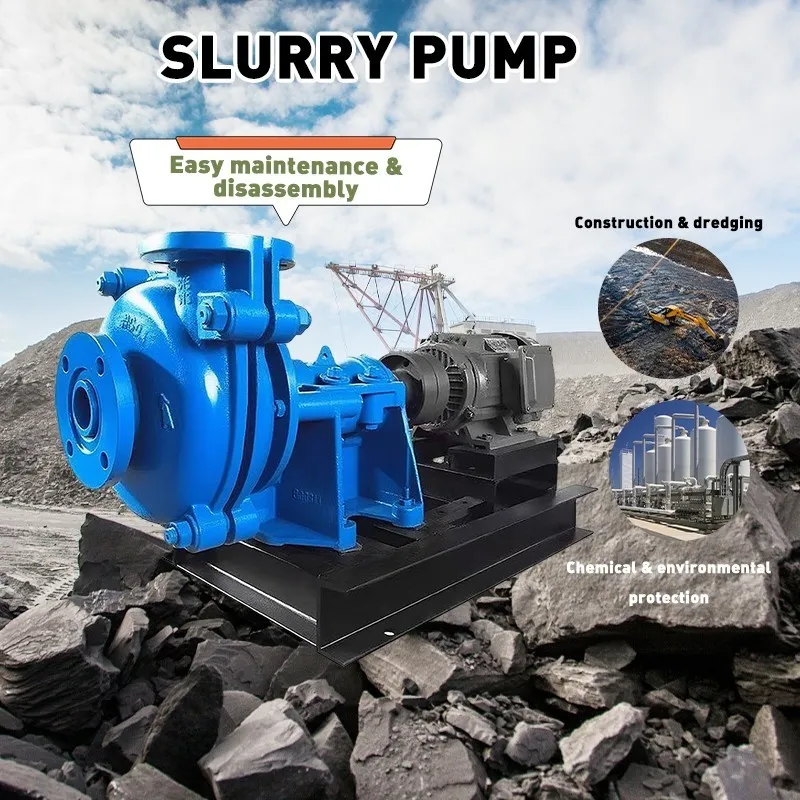
1. Pump Efficiency
One of the most significant effects of slurry density on pump performance is its impact on efficiency. As the density of the slurry increases, the pump has to work harder to move the mixture through the system. This is because the increased mass of the solid particles requires more energy to transport. When the pump has to use more energy, its efficiency decreases. In other words, you're using more power to move the same amount of slurry, which can lead to higher operating costs.
For example, if you have a Centrifugal Slurry Pump that's designed to work with a certain range of slurry densities, and you try to pump a slurry with a much higher density than it's rated for, the pump will have to work overtime. The impeller, which is responsible for creating the flow and pressure, will have to spin faster and with more force to move the heavier slurry. This extra strain on the pump can lead to increased wear and tear on the components, as well as a drop in overall efficiency.
2. Head and Flow Rate
The head and flow rate of a pump are also affected by slurry density. Head refers to the height or pressure that the pump can generate to move the slurry, while the flow rate is the volume of slurry that the pump can move in a given amount of time.
As the slurry density increases, the head that the pump can generate decreases. This is because the heavier slurry requires more energy to lift and move, so the pump has less capacity to create the necessary pressure. At the same time, the flow rate also tends to decrease. The pump may struggle to move the thicker, heavier slurry at the same speed as it would a less dense mixture.
Let's say you have a Large - sized Particle Slurry Pump that's designed to handle a specific flow rate and head for a particular slurry density. If you increase the density of the slurry, the pump may not be able to maintain the same flow rate and head. You might notice a reduction in the amount of slurry being pumped and a decrease in the pressure at the outlet.
3. Wear and Tear
Slurry density also has a major impact on the wear and tear of the pump components. The solid particles in the slurry act like abrasives, causing erosion and damage to the impeller, casing, and other internal parts of the pump.
When the slurry density is higher, there are more solid particles in the mixture, which means more abrasion. The increased wear can lead to premature failure of the pump components, requiring more frequent maintenance and replacement. This not only adds to the cost of operating the pump but also results in downtime, which can be a major headache for industrial operations.
For instance, a Corrosion - resistant Submersible Slurry Pump that's used in a high - density slurry application may experience faster wear on its impeller and casing. The constant rubbing of the solid particles against these surfaces can cause them to erode, reducing the pump's performance and lifespan.
4. Cavitation
Cavitation is another issue that can be exacerbated by high slurry density. Cavitation occurs when the pressure in the pump drops below the vapor pressure of the liquid, causing bubbles to form. These bubbles then collapse when they reach a higher - pressure area, creating shock waves that can damage the pump components.
Higher slurry density can increase the likelihood of cavitation because the pump has to work harder to move the heavier mixture. This can lead to a greater pressure drop within the pump, making it more prone to cavitation. Cavitation not only damages the pump but can also reduce its efficiency and performance.
So, why is it so important to pay attention to slurry density when it comes to industrial slurry sand pumps? Well, getting the slurry density right can help you optimize pump performance, reduce operating costs, and extend the lifespan of your equipment. By understanding the relationship between slurry density and pump performance, you can make informed decisions about the type of pump to use, the operating conditions, and the maintenance schedule.
If you're in the market for an industrial slurry sand pump, it's crucial to consider the slurry density of your application. Make sure to choose a pump that's designed to handle the specific density range of your slurry. Our company offers a wide range of pumps, including Centrifugal Slurry Pumps, Large - sized Particle Slurry Pumps, and Corrosion - resistant Submersible Slurry Pumps, that are engineered to perform efficiently in various slurry density conditions.
If you have any questions about how slurry density affects pump performance or need help selecting the right pump for your application, don't hesitate to reach out. We're here to assist you in making the best choice for your industrial needs. Whether you need advice on pump selection, installation, or maintenance, our team of experts is ready to provide you with the support and guidance you need.
Contact us today to start a discussion about your pump requirements and let's work together to find the perfect solution for your operation.
References
- "Slurry Pump Handbook" by Warman International
- "Centrifugal Pumps for Slurry Handling" by American Petroleum Institute
- Industry research reports on slurry pump technology and applications


