

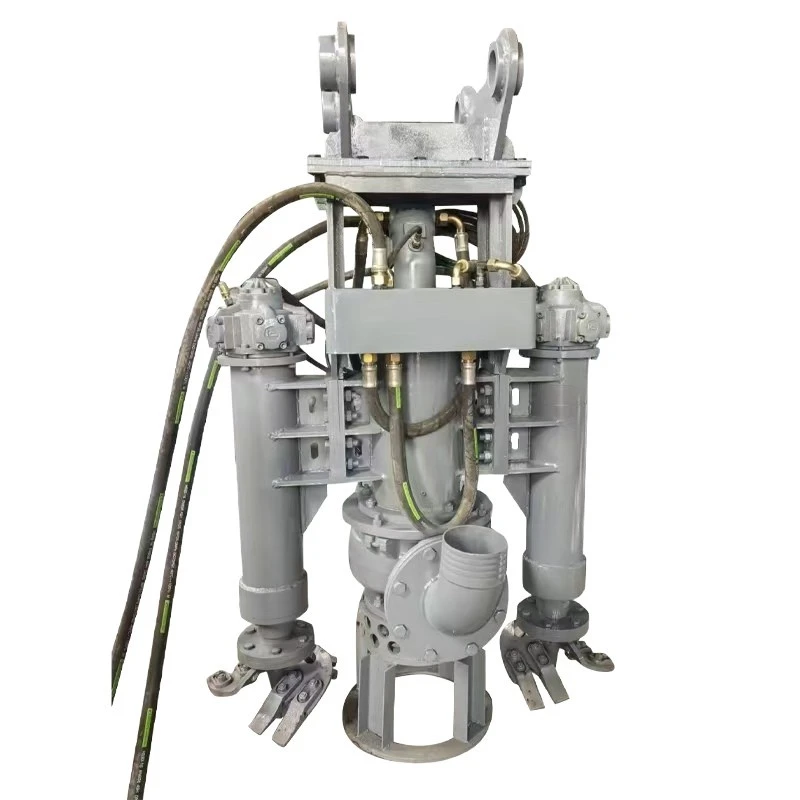
The hydraulic-driven submersible pump is a type of submersible pump system that uses a hydraulic power station (hydraulic pump station) as the power source. It transmits the pressure oil through hydraulic pipes to the submersible hydraulic motor, and then the hydraulic motor directly drives the pump body's impeller to rotate and work. The hydraulic-driven submersible pump is completely independent of the power grid. The power source (hydraulic station) is placed in a safe area on the ground, while only the pump body and the hydraulic motor are submerged underwater for operation. This "separation of power and execution" design makes it particularly suitable for scenarios without power supply, flammable and explosive environments, emergency rescue and relief, as well as large-flow drainage, sand extraction, and dredging operations that require frequent movement and deployment.
Product structure diagram

Motor upgrade
The piston motor is enhanced, with higher efficiency and greater stability compared to ordinary motors.
Thickened pump body
The pump body is made of high-chromium alloy wear-resistant material.
High-pressure explosion-proof oil pipe
Easy connection
Wide applicability
Built-in filter screen
Effective barrier, no blockage, forced mixing
Large-diameter outlet
Large flow channel design, stronger flow ability, sufficient sand discharge volume
Core advantage
High-efficiency hydraulic motor directly connected to the pump body
Using low-speed high-torque or high-speed quantitative hydraulic motors, directly connected to the pump shaft, without a reduction mechanism, with high transmission efficiency and a compact structure. The key friction pairs inside the motor have been treated for wear resistance, suitable for long-term heavy-load operation.
Closed/open hydraulic circuits flexible configuration
Based on the working conditions, choose closed circuits (higher efficiency, smaller volume) or open circuits (better heat dissipation, simpler maintenance). The hydraulic station can be equipped with diesel engine drive or motor drive, adapting to different energy conditions at the site.
Multiple seals and pressure-resistant shell
The dynamic seal between the hydraulic motor and the pump body adopts double-channel mechanical seal + oil chamber isolation to prevent external water pressure from entering the motor cavity. The shell is strength-checked and pressure-tested according to the diving depth to ensure safety in deep water.
Application fields
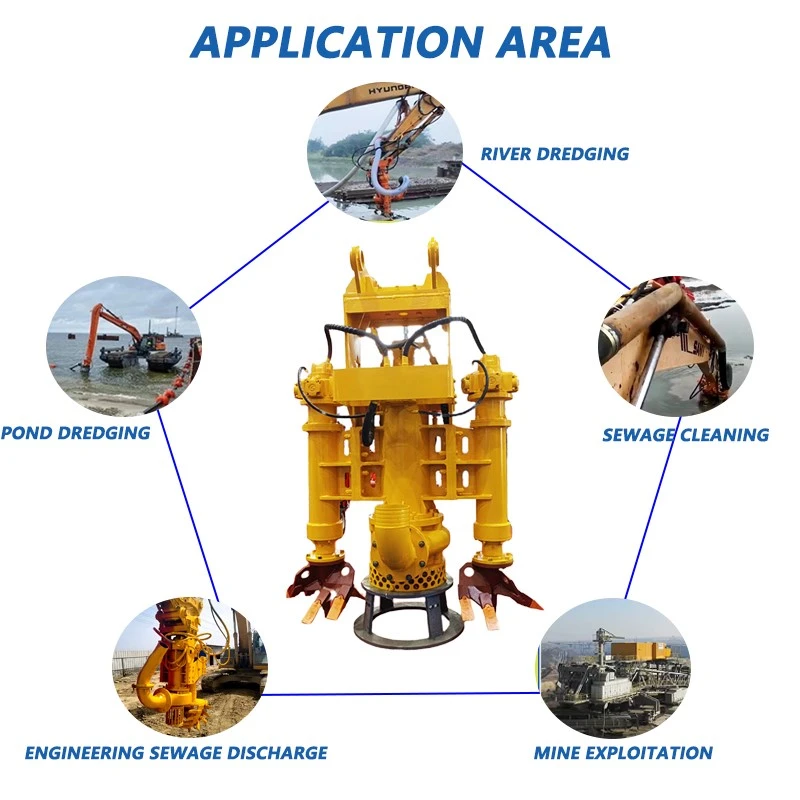
Flood prevention and emergency rescue, as well as urban internal flooding drainage: When the affected area has no reliable power supply or there is a risk of electrical leakage, hydraulic pumps can be quickly deployed to perform high-flow, strong drainage, ensuring the safety of rescue personnel.
Drainage for mines and tunnel projects: Water extraction in the working face of coal mines, metal mines, and tunnels, especially in areas with strict explosion-proof requirements for electrical equipment in gas mines.
Emergency response for oil fields and chemical industries: Drainage of accident ponds in oil tank areas and chemical factory areas, as well as cleaning of water accumulation within embankments, strictly prohibiting environments with the risk of electric sparks.
Underwater engineering and deep-water operations: Deep-water pits for bridge foundations, docks, and shipyards, water extraction for underwater robots, deep-sea sampling and transportation.
Long-distance water transfer and field operations: Remote outdoor construction, agricultural drought resistance, and temporary camp water supply, hydraulic pumps can be directly driven by the hydraulic system of construction machinery (such as excavators), without the need for additional power sources.
Firefighting and rescue: Firefighting and drainage in high-rise buildings, subways, and underground spaces, hydraulic pumps can be used as self-contained or externally connected drainage equipment for fire trucks.
Selection and Matching Suggestions
Hydraulic station power and flow: It must match the displacement and rotational speed requirements of the hydraulic motor, while also considering the pressure loss caused by the length of the oil pipe. Generally, it is recommended that the power of the hydraulic station be slightly more than 1.2 times the rated power of the pump set.
Length of the oil pipe and diameter: For long-distance transportation, a larger diameter oil pipe should be selected to reduce the loss along the way and ensure that the return oil backpressure is within the allowable range of the motor.
Hydraulic oil type and environmental temperature: Select hydraulic oil of the appropriate viscosity grade according to the operating environment temperature. In low-temperature environments, preheating or low-temperature hydraulic oil should be equipped.
Pump head material: For water-cleaning conditions, aluminum alloy or stainless steel can be selected; for sand-containing sand extraction conditions, high-chromium cast iron or wear-resistant alloy pump heads should be upgraded.
Control method: Manual control (low cost, reliable) or electro-hydraulic proportional control (high precision, remote control capability), choose according to the on-site operating conditions.
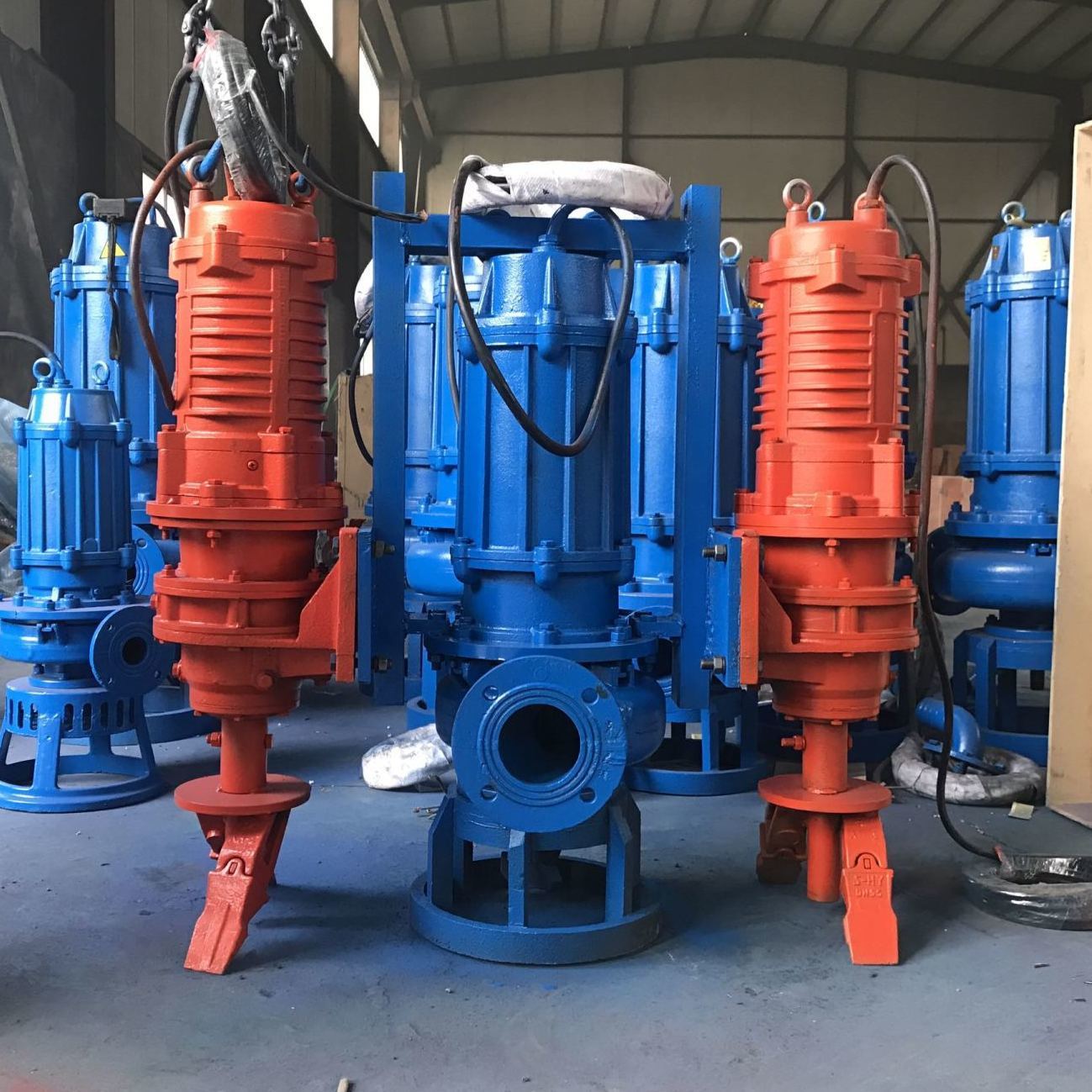
Products Display

Hot Tags: hydraulic-driven sand pumping pump, China hydraulic-driven sand pumping pump manufacturers, suppliers, factory, High chromium Alloy Wear resistant Submersible Slurry Pump, Small Submersible Slurry Pump, Stirring Type Submersible Slurry Pump, submersible dredge pump, Submersible Pump for Large Particle Slurry, Submersible Slurry Pump for High Solids


